

Extending the reach of the military diver
Underwater mobility is a critical consideration in specialised diving operations. A diver’s physical endurance, swimming speed and ability to carry equipment naturally place limits on range and mission time. Marine propulsion systems address this challenge by providing controlled mechanical thrust, allowing divers to travel farther, conserve energy and focus on the task rather than propulsion.
For military and professional divers, this capability can be particularly valuable where underwater movement, endurance and manoeuvrability are important operational considerations.
What are Marine Propulsion Systems?
Marine propulsion systems convert stored energy into controlled underwater movement. In diver propulsion applications, this typically involves an electric power source, motor, propeller or jet propulsion mechanism, control system and an ergonomic interface that allows the diver to manage direction and speed.
A capable system must balance several factors simultaneously.
Performance determines how effectively the system can move the diver through the water.
Endurance determines how long the system can remain operational.
Manoeuvrability allows the diver to control movement precisely in confined or changing underwater environments.
Size and weight influence transportation, deployment and diver workload.
Reliability becomes critical when equipment is being used in demanding or mission-sensitive environments.
These characteristics cannot be considered independently. Increasing power, for example, can affect weight, battery requirements, endurance and handling. Marine propulsion is therefore fundamentally a systems-engineering challenge.
Relevance to India’s Defence forces
India’s maritime geography creates a wide range of underwater operating environments. Naval and specialised diving personnel may operate around harbours, coastal areas, vessels and other underwater environments where mobility and controlled movement can influence operational effectiveness.
A diver propulsion system can provide advantages such as:
- Extended underwater range
- Reduced physical exertion
- Improved movement efficiency
- Greater operational flexibility
- Controlled navigation over longer distances
- Ability to carry out underwater tasks while conserving diver energy
For defence applications, however, performance is only one consideration. Reliability, maintainability, power management, environmental resistance, ergonomics and ease of deployment are equally important.
INDIC’s Marine Propulsion capability
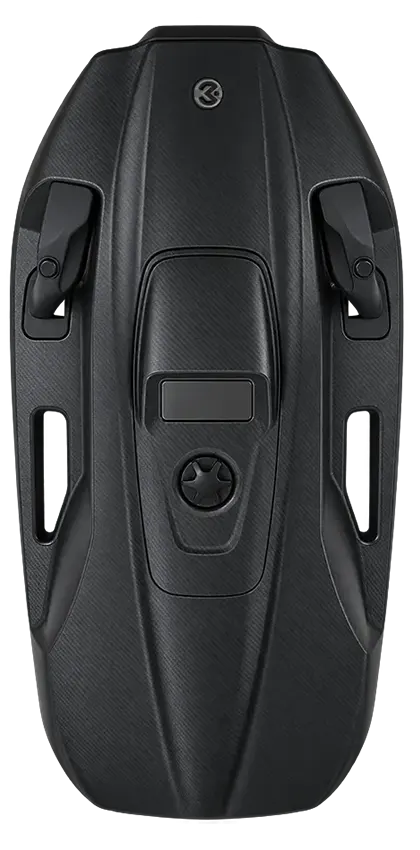
INDIC is developing marine propulsion systems for specialised underwater applications, with Matsya representing its dive propulsion platform.
Matsya is designed around the fundamental requirements of underwater mobility—propulsion performance, endurance, manoeuvrability and controlled operation—within a compact system intended for professional and tactical diving applications.
INDIC’s approach is not limited to developing a propulsion unit as an isolated product. The objective is to build the engineering and manufacturing capability required to develop, test, refine and support specialised underwater propulsion systems in India.
As this capability develops, INDIC aims to work progressively closer to the requirements of professional and defence users, using engineering feedback and system evaluation to improve performance, usability and reliability.